The Quiet Superpower Inside Your Cells: Mitochondrial Uncoupling
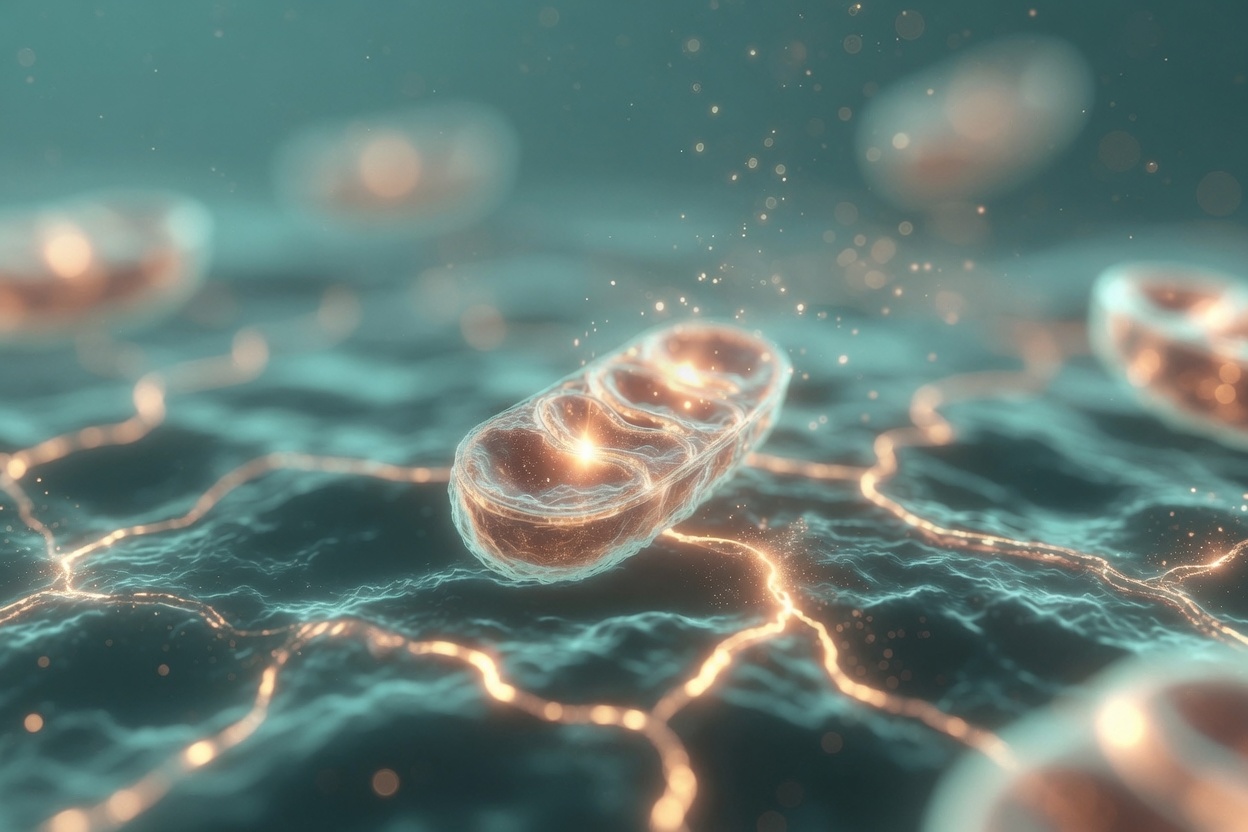
Most of us walk around thinking fatigue, brain fog, or that slow recovery after stress or injury is just “part of getting older” or “what happens after a health situation.” If you experience neurofatigue this process I’m going to describe is a key function to be mindful of and leverage for maintaining optimal energy levels.
What if the real issue is that the tiny power plants inside our cells are running too tightly—under so much pressure that they start throwing off damaging sparks?
And what if the fix isn’t another stimulant, green medicine, or another extreme diet… but a gentle, natural process our bodies already know how to do?
That process is called mitochondrial uncoupling. Once you understand it in plain language and see the science behind it, a lot of the “Native Living” pieces from my thesis suddenly click into place.
A Simple Framework (Engine Analogy) to understand the basic process
Think of every cell in your body as a house that needs electricity. Inside each cell sit thousands of tiny engines called mitochondria. Their job is to burn the fuel from your food and turn it into usable energy (ATP).
In a perfect world the engines run extremely efficiently. But when the pressure inside the engine gets too high, little sparks of damage (reactive oxygen species (ROS) start flying. Those sparks wear out the engines, inflame the cell, and leave you feeling drained, inflamed, or stuck in recovery mode. ROS is produced during normal cellular processes regardless of any additional processes.
Mitochondrial uncoupling is like opening a small, controlled safety valve on the engine. A little bit of that high pressure is allowed to leak back across the membrane as gentle heat instead of being forced into making more ATP. It’s not about making less energy. It’s about making cleaner, more sustainable energy with less collateral damage.

The Science That Makes It work
Here’s the actual cellular process of mitochondrial uncoupling:
1. The Normal “Coupled” Process (How mitochondria usually make energy)
Inside each mitochondrion there is a double membrane. The inner membrane is the important one.
Electrons from the food you eat (mainly fats and a little glucose) enter a series of protein complexes sitting in that inner membrane. This is called the electron transport chain (ETC). As the electrons move along the chain, they give the complexes the energy to pump positively charged protons out of the inner compartment. This creates a steep electrical and chemical gradient. Like water building up behind a dam. The inside becomes more negative and the outside more positive. The only normal way for those protons to flow back in is through a special turbine, a process called ATP synthase. As they rush through, the turbine spins and makes ATP (your cellular energy currency).
This tight linking of electron flow → proton pumping → ATP production is called coupling. It is efficient… until the pressure gets too high.

2. Where the trouble starts
When the proton gradient becomes very high and (the “dam” is overflowing), two things happen:
- Electrons start to leak sideways out of the chain instead of moving cleanly forward.
- Those leaked electrons react with oxygen and form reactive oxygen species (ROS) — the “sparks” or free radicals that damage proteins, lipids, and mitochondrial DNA.
Chronic high pressure = more sparks = tired, inflamed, slowly declining cells. This is especially relevant for brain and nerve cells after injury.

3. What uncoupling actually does
Uncoupling simply means allowing some of those protons to slip back across the inner membrane without going through the ATP synthase turbine. Because they bypass the turbine, the stored energy in the gradient is not captured as ATP. Instead, it is released as a small amount of heat.
Uncoupling simply decides where that energy goes when the protons come back in:
- Through ATP synthase → ATP (useful energy)
- Through the uncoupling path → heat (energy is dissipated)
It is not that uncoupling takes extra energy. It is that some of the energy the cell already paid for is deliberately allowed to escape as heat rather than being banked as ATP.
Why the cell does this on purpose
By letting a little pressure off as heat:
- The gradient never gets dangerously high
- Fewer free-radical “sparks” are produced
- The mitochondria stay healthier longer
- The cell is often stimulated to build more mitochondria
That is the trade-off: a small loss in immediate ATP efficiency in exchange for cleaner, more sustainable long-term function.
Think of it as opening a controlled relief valve on the dam so the water level never gets dangerously high. The turbine still works, but the overall pressure stays in a safer range.
4. How the “valve” opens (the molecular details)
There are a few natural ways this happens:
Uncoupling proteins (UCPs): Especially UCP2 and UCP3 in muscle, brain, and other tissues. These are actual protein channels that can let protons leak back in when activated.
Free fatty acids: Certain fats (including those from olive oil, avocado, and MCT-rich sheep/goat dairy, walnuts, Grass-fed butter and fatty fish just to name some) can help activate these proteins or create a mild leak themselves.
Post-biotics from your gut bacteria: Short-chain fatty acids such as butyrate and acetate (produced when bacteria ferment foods like resistant starchs, cruciferous vegetables, etc.) act as signals that increase the activity of uncoupling proteins and keep electron flow smoother.
Mild natural “leak”: This always exists at a low level and becomes more pronounced under the right conditions (time-restricted eating, lower insulin, higher fat availability).
This is why a high-quality, lectin-free, time-restricted, higher-fat way of eating with targeted prebiotics is so effective. You’re not just “going keto.” You’re feeding the gut bacteria that manufacture the very molecules that tell your mitochondria to mildly uncouple gently and stay resilient.
The key word is mild. Extreme uncoupling (as seen with certain drugs or toxins) wastes too much energy and can be harmful. The gentle, diet-and-lifestyle-driven version is protective.
5. What the cell gains from this controlled leak
Because the pressure stays lower:
- Far fewer free-radical sparks are produced
- Existing mitochondria last longer and function better
- The cell receives a signal to build new mitochondria (mitochondrial biogenesis)
- Fat oxidation becomes easier because the system is no longer jammed at high pressure
- Overall oxidative stress drops, which supports calmer inflammation and better cellular repair especially valuable for a recovering nervous system
Simple visual summary
Normal tight coupling:
Electrons → protons pumped hard → very high pressure → some electrons leak as ROS → ATP made efficiently but with collateral damage.

Mild uncoupling:
Electrons → protons pumped → moderate pressure → some protons leak harmlessly as heat → fewer ROS → ATP still made + cell builds more mitochondria + less long-term damage.

Why This Matters
For me after my brainstem stroke and surgery, my nervous system was highly sensitive to inflammation and energy demands. Mitochondria in neurons and supporting cells took a hit. Secondary mitochondrial dysfunction is common and what I was experiencing. After a health situation the body is pouring resources into repair and inflammation control. That creates a higher energy demand at a time when many mitochondria are already compromised. Unless we are consciously focused on the removal of damaged mitochondria (mitophagy), and creation of new mitochondria (biogenesis) it may result in the existing mitochondria underperforming for months or even years.
By supporting mild uncoupling you:
- Lower oxidative stress in the very regions that need repair
- Improve the energy available for neuroplasticity and vagus-nerve function
- Reduce the chronic low-grade inflammation that keeps the system stuck in “survival mode”
This all results in steady energy, clearer thinking, and a body that recovers instead of just coping. True healing becomes a realistic outcome and not wishful thinking that never comes.
Putting It Into Practice (The Native Living Way)
You don’t need to overhaul everything overnight. Start with the foundations that already support uncoupling:
- Time-restricted eating window (ideally 6–8 hours) so autophagy and ketosis have room to operate
- Whole, organic, lectin-free foods that feed the right gut bacteria
- High-quality fats (olive oil, avocado, sheep/goat dairy, pasture-raised meats) that supply the fuel mitochondria prefer
- Gentle daily movement and fascia work to keep circulation and lymphatic flow moving without overtaxing the system
- Grounding, proper light exposure, lower endocrine disruptors and a minimal non-native Electromagnetic Field (nn-EMF) exposure (artificial energy fields like Wi-Fi, cell phones, and power lines) so the nervous system isn’t fighting an extra oxidative load
What you add such as targeted post-biotic foods, electrons from the Earth, photons from sunlight light, matter as much or more then what you remove.
Final Thought
Mitochondrial uncoupling is not a biohack or a trend. It is ancestral biology refined by modern understanding of the gut-mitochondria axis.
When we stop forcing our cellular engines to run at maximum pressure all day and instead give them the conditions to run cleanly and efficiently, the body responds with the vitality it was designed for.
You already have the tools. Keep refining them. Listen to your body. And remember: the mitochondria and the life they power will thank you.
Keep the faith,
Corey
The entire contents of this blog are based upon the opinions/research of Corey Diggins, unless otherwise noted. Individual articles are based upon the opinions of the respective author, who retains copyright as marked. The information on this blog is not intended to replace a one-on-one relationship with a qualified health care professional and is not intended as medical advice. It is intended as a sharing of knowledge and information from the research and experience of Corey Diggins. Corey Diggins encourages you to make your own health care decisions based upon your research and in partnership with a qualified health care professional.
Resources:
Images were created with Grok AI.
Foundational mechanism (ETC, proton gradient, coupling)
Nicholls, David G., and Stuart J. Ferguson. Bioenergetics 4. Academic Press, 2013.
Brand, Martin D., and David G. Nicholls. “Assessing Mitochondrial Dysfunction in Cells.” Biochemical Journal, vol. 435, no. 2, 2011, pp. 297–312.
High membrane potential → electron leak → ROS production
Murphy, Michael P. “How Mitochondria Produce Reactive Oxygen Species.” Biochemical Journal, vol. 417, no. 1, 2009, pp. 1–13.
Korshunov, Sergey S., et al. “High Protonic Potential Actuates a Mechanism of Production of Reactive Oxygen Species in Mitochondria.” FEBS Letters, vol. 416, no. 1, 1997, pp. 15–18.
Mild uncoupling reduces ROS
Cadenas, Susana. “Mitochondrial Uncoupling, ROS Generation and Cardioprotection.” Biochimica et Biophysica Acta (BBA) – Bioenergetics, vol. 1859, no. 9, 2018, pp. 940–950.
Amara, Catherine E., et al. “Mild Mitochondrial Uncoupling Impacts Cellular Aging in Human Muscles in Vivo.” Proceedings of the National Academy of Sciences, vol. 104, no. 3, 2007, pp. 1057–1062.
Demine, Stéphane, et al. “Mitochondrial Uncoupling: A Key Controller of Biological Processes in Physiology and Diseases.” Cells, vol. 8, no. 8, 2019, article 795.
Relevance to brain / nerve cells after injury (stroke)
Zorov, Dmitry B., et al. “Neuroprotective Potential of Mild Uncoupling.” Brain Sciences, vol. 11, no. 8, 2021, article 1050.
Sims, Neil R., and Hélène Muyderman. “Mitochondria, Oxidative Metabolism and Cell Death in Stroke.” Biochimica et Biophysica Acta (BBA) – Molecular Basis of Disease, vol. 1802, no. 1, 2010, pp. 80–91.


0 Comments